Category: Player Digest

Measuring success without the scales

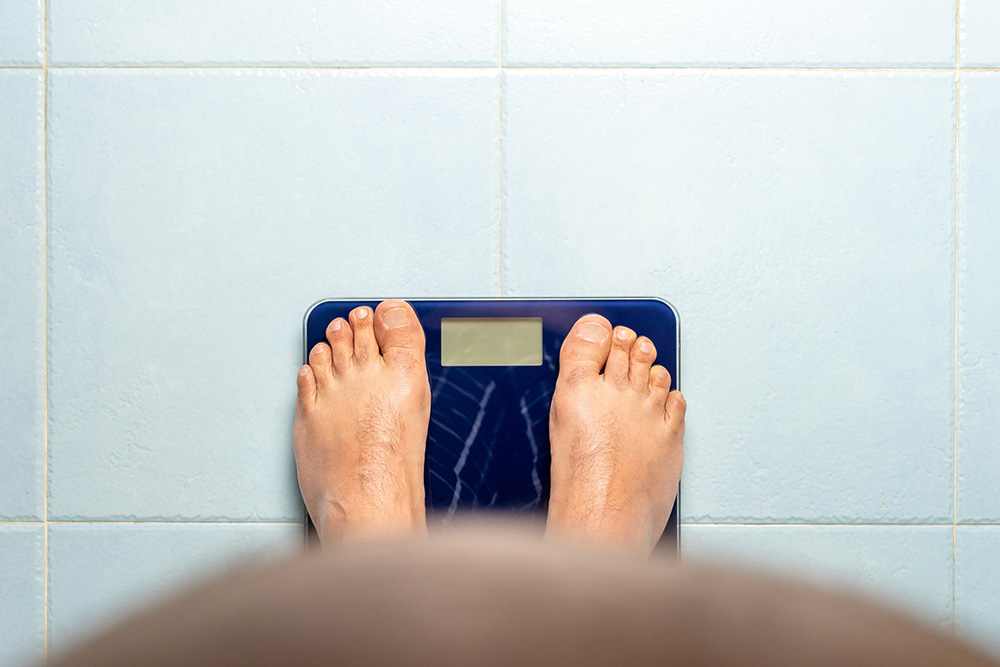
Sometimes, the scales are not our friend. It’s all too easy to get hung up on what they say each week, and it can be distressing when things aren’t going the way you’d hoped. When that happens, try not to take it to heart – there’s a whole lot more to weight loss than just the reading you get at one specific time.

Weight loss isn’t linear, which can be a hard thing to wrap your head around. That’s why you should focus on your non-scale victories as well as keeping a log of your weight. Keep a list on your phone or in a notebook and make a note of them when you notice them, so you can go back for a hit of motivation when you need it.

What are non-scale victories?

Non-scale victories (NSVs) are anything positive you notice about your weight loss – but as the name suggests, we’re not talking the number on the scales. Here are some examples of NSVs:

Measurements

A soft tape measure is a handy bit of kit for checking your weight loss progress. Take regular measurements of the same parts of your body: hips, waist, chest, thighs. You’ll soon see the inches falling away as you lose weight.

Photos

Take regular, full-length photos. You’re probably not going to feel comfortable taking them or looking at them, but no one has to see them but you, and sometimes we only see how much we’ve changed when looking back at photos.

Clothing

Pick a non-stretchy, structured item of clothing like jeans or a shirt and try it on once a month. As your body shape changes, you’ll notice how it feels (and looks) different on you.

Mood and energy

Eating better often leads to an increase in energy, as you’re fuelling your body with what it needs to flourish. Losing weight can also help with your sleep quality too, especially if you snore or have sleep apnoea.

Your mood may improve too, thanks to the feel-good hormones released when you get active, plus the sense of accomplishment when you start hitting your weight loss goals.

Fitness

Your strength, flexibility and endurance will get better and better the more you move. Make a note of your workouts, and you’ll soon see how something you found difficult in week 1 is a breeze by week 12.

Ease of movement

Losing weight is good news for your joints, which will start to move more freely and won’t ache as much. This is often a big one for guys losing weight, so if you notice your knees aren’t aching at the end of a long day as much as they were before, that’s a huge deal!

Everyday tasks

As you lose weight and your fitness improves, you’ll find that doing things like housework, climbing the stairs, and carrying shopping all become easier.

Comfortable digestion

Gone are the days of seemingly never-ending bloating and gas. Good food moves through your body better, and you’ll feel much better because of it.

Improved medical markers

Losing even a small amount of weight can help improve many medical markers, like your blood pressure, cholesterol levels, and glucose levels. Each step you take towards losing weight is a positive step towards lowering your risk of developing serious health conditions.

All these improvements to your health and wellbeing are something to celebrate but try not to fall into the trap of rewarding yourself with food. Instead, reward yourself with:

  • Playing your favourite video game, or treating yourself to a new one you’ve had your eye on
  • Binge-watching your favourite show
  • Meeting up with a friend for a coffee
  • Reading a good new book
  • Meditating
  • Listening to your favourite music
  • Going to the cinema

Whatever you choose is up to you. Have fun but remember not to go too nuts – you’ve still got weight to lose, after all!


Smart swaps: Healthy recipe hacks

A common misconception is that you’ve got to give up all the foods you love when you’re trying to lose weight. It’s easy to see where this has come from: it probably doesn’t seem possible that you can still enjoy your favourite takeaways and still lose weight, for example.

But the best way to lose weight and not completely lose your mind while doing so is to keep a little of what you love, using simple swaps to cut calories and make things healthier. Here’s how you can do that in the kitchen, so you don’t have to give up your favourite dishes.

Swap refined grains for whole grains

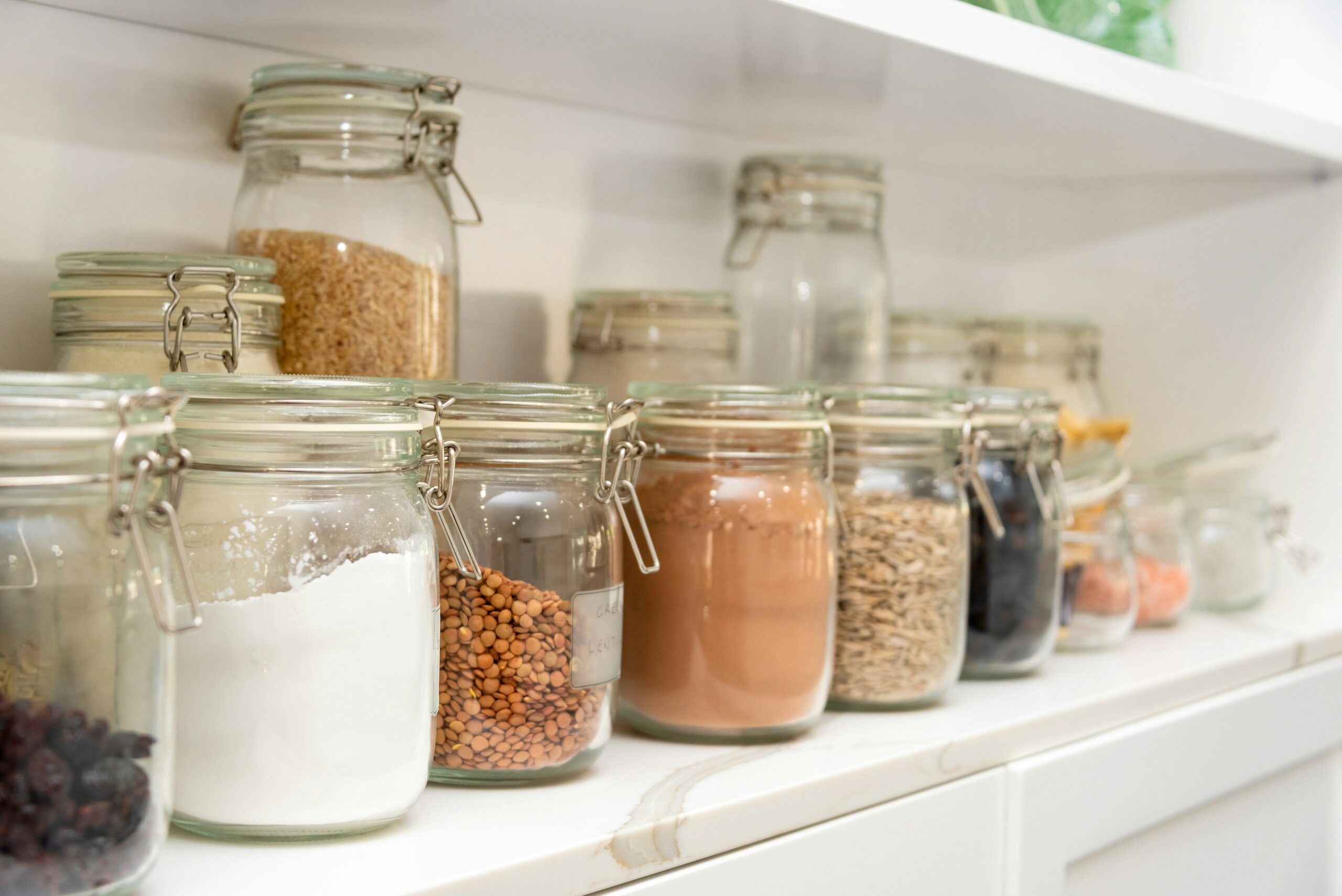
Replace white flour with whole wheat flour, white rice with brown rice, and white bread with whole grain bread. Whole grains are rich in fibre which helps to keep you fuller for longer.

Make it veggie

An easy way to increase the number of vegetables you eat is to make your recipe vegetarian or vegan. Take your usual chilli and swap the mince for kidney beans or black, or bulk up your favourite recipe by adding chopped courgette, peppers or aubergine. Vegetables are low in calories, so you’ll be boosting the volume of your meal (good for feeling fuller) without adding unnecessary extra calories.

Use healthier fats

When cooking, use healthier oils like olive oil, avocado oil or sesame oil. These oils are better for you because they contain monounsaturated fatty acids, which can help to increase levels of ‘good’ cholesterol (HDL) and lower ‘bad’ cholesterol (LDL) levels.

Oil is high in calories, so be sure to measure how much you’re using. For example, 1 tbsp of olive oil is 119 calories, so don’t pour freely from the bottle! Get a set of cheap measuring spoons so you know exactly how much you’re using.

To further cut calories, consider using spray oil like Frylight cooking spray. You can get different varieties, so keep an eye out for olive or coconut spray oil options. One spray of Frylight is 1 calorie, and a short spray of oil is going to very drastically cut down on calories.

Choose lean proteins

Lean proteins like chicken, turkey, and fish, are lower in fat and calories than red meat like beef, pork, and lamb. Try switching beef mince for turkey mince or even chicken mince (which you can find in Aldi) when making burgers, and switch steak tacos for pulled chicken, turkey mince, or even prawns.

Beans, lentils, tofu, and eggs are also examples of lean protein. Try swapping red and processed meats when making things like chilli, spaghetti dishes, and stir-fries.


The mid-season check in: how are you doing?

As the season progresses, it’s important to take a step back and consider how things are going. Are you making good progress towards those goals you set back in week 1? Or do you need to adjust them now that you’ve got a few weeks under your belt?

Reflect on your progress

This is a good time to take stock of what you’ve achieved in the last few weeks. Have you lost weight? Has your fitness improved? Are you enjoying yourself out on the pitch?

These are all important things to think about, and if you’re happy with the progress you’ve made that’s cause for celebration!

  • Celebrate your achievements. This isn’t a time to be modest: be proud about what you’ve done.
  • Think about what went right. What went into your success? What really helped? Knowing these answers will make it easier to replicate your achievements as you work towards your next goals.
  • Set new challenges. Take what you’ve learned in the past few weeks and use your knowledge to challenge yourself further. What will get you even closer to your overall goal? Can you challenge yourself to cook more, or to try a new workout?
  • Continue to track your progress. You’ve made a great start, but don’t lose momentum! Keep going, and check in with yourself every few weeks to see how you’re doing.

Adjusting your goals

Things might not have gone exactly as you’d hoped, and that’s ok. Maybe life got in the way, or you had a few false starts with getting to grips with changing your eating habits. Maybe your initial goals were a bit too ambitious. It happens. If this sounds familiar, think about what you can change and how, and make a pledge to work on it.

  • Are your goals realistic? We’d all love to lose a huge amount of weight in a short space of time, but that’s not how it works. Make sure your goal is something you’ve got a fair shot at achieving, otherwise you’ll just end up frustrated and demotivated.
  • Can you try something new? If you’ve not quite achieved what you’d hoped to, consider a new approach. Switch things up and try something different, whether that’s a new workout, a way to increase your daily activity, or a new approach to eating better.
  • Seek support. Confide in friends and family and you might find they’re a treasure trove of support and encouragement. If you’re not comfortable turning to people you know, don’t forget about your MAN v FAT Rugby teammates! They’ll know better than anyone what it’s like to be working towards weight loss goals.
  • Speak to your coach. Your coach is also someone you should be leaning on when times get tough, it’s what they’re there for! Arrange to have a chat with them and they’ll be more than happy to help, whether it’s looking over your food diary to spot opportunities for change, or for a pep talk when things feel tough, your coach is there for you.

Check in regularly

It’s important to check in with yourself regularly as you’re working towards your weight loss goals. People who are successful at losing weight (and keeping it off long-term) are the ones who are fully in tune with their body and mind, continually asking themselves if there’s anything they can do to better work towards their goals.

Thinking about your goals and evaluating your progress will help to keep you accountable and on track, but it’s also incredibly motivating to see the progress you’re making. Enjoy the process and make sure you take a moment to celebrate your success along the way.


How does MAN v FAT Rugby scoring work?

If you’re keen for success and are eyeing up the top spot, you’ll need to know how the MAN v FAT Rugby scoring system works. Let’s get into it. On the pitch, the rules for MAN v FAT Rugby are pretty similar to the rules for any small-sided touch rugby league, however we will be following a new version of the game called T1 Rugby. The thing that makes MAN v FAT Rugby special? There are opportunities to score bonus tries based on your weight loss and healthy habits. That’s what’s going to help you lose weight, and what’s going to help you and your team sail to the top of the league.

Players can score bonus tries in four ways:

  1. Team bonus. Each week we add up the number of players on your team that have either lost weight versus the previous week or maintained their healthy BMI*. We award a bonus try for each pair, up to a maximum of 5 tries per team – so that’s 1 bonus try per every 2 player that loses weight, with half tries rounded up.*All players must have a BMI of at least 27.5 to join MAN v FAT Rugby. Once a player reaches a healthy BMI, we no longer encourage them to keep losing weight, so the rules switch up for them and they get bonuses for maintaining a healthy BMI, whether they gain or lose weight. Players who record a weight that is both heavier than the previous week and heavier than they were at the start of the current season will score an own goal.

  2. Hat tricks. Any time an individual player records three losses within their club’s league season, they score 1 full bonus try. These losses don’t need to be consecutive, but they don’t overlap seasons, so one player can get a maximum of 4 hat tricks for his team each season.

  3. 5% loss bonuses. When a player reaches an incremental milestone loss of 5% of his body weight, he gets 3 full bonus tries for his team, a maximum of twice per season. This is always based off your weight when you first join us, so you’ll get a bonus for losing 5%, 10%, 15% of that starting weight, and so on, until you reach a healthy BMI for your height.If you manage to lose 15% of your starting weight in just one season, first of all, hats off to you, and second of all, don’t worry about missing out on those sweet, sweet bonuses – they’ll carry over to the first week of the following season so you can hit the ground running.

  4. Food diary tracking. Teams will score 1 additional bonus try for every 1-3 players who complete their weekly food diaries. This encourages mindfulness about your eating habits and a supportive team, since you’ll all need to work together and stay accountable to one another if you want to score the maximum number of points.

Losing weight is the key to success with your team in MAN v FAT Rugby, so don’t forget to focus on building your healthy habits as well as your performance on the pitch.


Get to know DOMS – and how to recover from it

If you’ve taken part in your first MAN v FAT Rugby session and feel like you can’t walk the next day, that’d be the DOMS. Never heard of it? Let’s get into it.

What is DOMS?

DOMS stands for delayed-onset muscle soreness. It’s a fancy term for the muscle soreness that can happen after you exercise, especially if you’ve not exercised for a while, or if you’ve had a particularly vigorous session.

You might feel it in one place, like your legs, when you move or tense muscles. It usually comes on about 24-48 hours after exercise and can last a few days.

Is it actually DOMS?

It’s important to remember that DOMS is delayed. It’s not something you feel during exercise, so if you’re feeling pain during exercise don’t just dismiss it. DOMS is also about soreness, it’s not a sharp or severe pain. It also shouldn’t stop you from doing everyday activities, even though you might feel sore or uncomfortable.

If you’re feeling a sharp, severe pain that’s so bad it’s limiting your movement, that’s more likely to be an injury you should get checked out.

Why do we get DOMS?

DOMS is due to tiny tears in your muscles from moving them in a way your body isn’t used to. That can be from doing exercise that’s new to you, returning to exercise after a break, or if you exercise more vigorously than you’re used to.

‘Tiny tears’ in your muscles may sound scary, but it’s normal and expected. The pain you feel is thought to be the body’s inflammatory response to these microscopic tears.

Is DOMS a good thing?

You’ve heard of ‘no pain, no gain’, right? Well, feeling sore after exercise isn’t really a goal you should aim for, because that could lead to you pushing yourself too far and ending up with an injury. Even if you’re lucky and you don’t injure yourself, pushing yourself to do too much, too soon can lead to feeling fatigued, overwhelmed, and demotivated.

There is a small nugget of wisdom in the ‘no pain, no gain’ philosophy though: when you work your muscles and produce those tiny tears, your body will get to work repairing them. And if you give your body the right tools to repair your muscles (healthy food including plenty of healthy protein and good fats, good sleep), they’ll build back stronger and leaner.

Will I always experience DOMS?

As you get used to being active, you’ll experience DOMS less and less. This is where real progress is made, because if you keep it up, you’ll soon be able to do the hard things that once caused you to crawl up the stairs without any soreness the next day. Then you can gradually increase the intensity of your workouts.

Of course, if you stop exercising, then try to exercise at the same intensity after a break of several weeks, you’ll probably experience DOMS again as your body will be out of practice.

Recovering from DOMS

We know DOMS can feel crap, and no amount of telling yourself it’s for your own good helps when every step hurts. Here’s how you can help your body recover:

  • Rest is absolutely vital to help your body thrive, and rest is just as important as activity when you’re looking to reduce fat and build muscle.
  • Make sure you have rest days in between your MAN v FAT Rugby sessions and other exercise. This should include ‘active recovery’, where you do light exercise, like stretching and walking. It’ll probably feel awful at first, but warming your muscles up gently like this will do them the world of good. Don’t stop using your muscles entirely: gentle movement is one of the most effective ways of easing the soreness, through increased blood flow.
  • Try and get enough sleep. Your body does its best repairing and rebuilding when you’re asleep, so get a good bedtime routine going and get your head down.
  • Drink plenty of water and keep up your healthy eating, making sure you eat lots of lean protein.
  • Massage your sore muscles. A foam roller can help.

How to prevent DOMS

The only foolproof way of preventing DOMS completely is not exercising, but you shouldn’t let fear of DOMS put you off being active.

The most important way of lessening the chances of developing debilitating DOMS is to warm up and cool down properly when you exercise. Dynamic warm ups, where you mimic the exercises you’re about to do, is a great way of preparing your muscles for activity.

Similarly, cooling down after your work out gets your muscles gradually used to not moving as much again.

Get the pump?

We’d all love to be able to instantly do Arnie-level workouts at the gym, or be able to outrun Usain Bolt, but listen to your body and go easy.

Losing weight and getting fitter takes time, and though that can be frustrating, push yourself too hard and you’ll end up out of action with a nasty injury.

It’s ok to challenge yourself and up the intensity of your workouts, but only do what you’re comfortable with, and gradually increase the intensity instead of suddenly going for broke.


MAN v FAT Football players’ top tips for new MAN v FAT Rugby players

Starting something new is always daunting, and you might be wondering what your time at MAN v FAT Rugby is going to be like. We completely get it, and while it’s easy for us to say ‘it’ll all be fine!’, it’s much better to hear it from people who have been in your shoes.

We’ve been running MAN v FAT Football for years and (not to brag or anything) have helped thousands of men lose weight. We asked our current football players what advice they’d give to guys just starting out, and this is what they said.

You get what you put in

“MAN v FAT is a journey you’re in control of” says Lee, who thrived on how good it feels to be improving your health. “Choices will be hard, but the feel-good factor when you achieve your targets and people start to notice your change is something you won’t experience anywhere else.”

Similarly, Nathan is keen to point out the importance of prioritizing weight loss. He’s been a MAN v FAT player for over 7 years but didn’t take it seriously at first.

“I prioritized the football first, so I yo-yoed in weight, never really getting anywhere. But then I finally started to focus on weight loss.”

He’s now lost over 70lbs, and knows a lot about the challenges of staying consistent. “It’s not a race, it’s not about who loses it the quickest. You will fall off the wagon at some point, it’s just about getting back on. You’ve got to keep going, make it a lifestyle change”.

Support each other

One thing that makes MAN v FAT Football so successful is the community the clubs create. Making the most of it is key to your long-term success, says Alan.

“Build a good community within your club, not only with your own team but with everyone. Support each other with weight loss, meal ideas, mental health, everything. When there’s an excellent support network available, weight loss will be easier.”

Ryan agrees and credits his MAN v FAT community with being a big part of his weight loss success. “It’s one of the best things I’ve ever done. It’s a great community, the team spirit you build is second to none.”

Go at your own pace

“Once I had lost 10% of my starting weight, I slowly introduced extra physical activities which then helped push me to losing 15% of my body weight” says Andrew.

But remember to listen to your body, and don’t push yourself if you’re not ready. If you’ve not exercised since you were in school, you’re not going to suddenly be a pro rugby player. Anthony stresses the importance of remembering this: “Stretch those hamstrings, you’re no longer a teenager!”

Alan agrees and says “You’ll remember that you’re not a kid anymore and you’ll be tired out after 5-10 minutes at your first game. Enjoy yourself but remember to listen to your body. We’ve all been there pushing through it trying to look good!”

Enjoy it!

MAN v FAT Rugby is a great way of losing weight and improving your health, and one of the best things about it is that it’s actually fun! Above all, we hope you have a great time getting to know your teammates and getting out there on the pitch.

We’ll leave it to Nathan to sum it all up: “My advice is to do it now, take the risk, feel uncomfortable at your first weigh in but after that if you’re driven and committed and are consistent with your efforts, enjoy your rugby and the rest will come.”


Why you should aim to lose 5% of your body weight

You might think that when it comes to weight loss, the more you can lose, the better. But studies show that losing even 5% of your total body weight can bring amazing health benefits.

If you want to lose weight, you probably have some idea of how much you want to lose. And while it’s great to have goals, saying you want to lose hundreds of pounds can feel incredibly daunting.

Short-term goals are just as important as your long-term ones to give you focus and keep your motivation levels high. Aiming to lose 5% of your body weight is a great one to consider: it’s attainable, and it can be built upon if needed.

What’s more, studies show that losing 5% of your bodyweight leads to incredible health outcomes if you’re overweight. Hitting 5% lost can lead to:

  • Reduced risk of heart attack and stroke. This is because losing weight can elevate HDL (good) cholesterol and lower triglycerides (bad fats). It can lower your blood pressure by an average of 5 mmHg.
  • Reduction in insulin resistance, decreasing your risk of developing type 2 diabetes.
  • Decreased risk of developing certain cancers.
  • Better sleep and reduction of sleep disorders like sleep apnea.
  • Reduced pressure on your joints.
  • Lowered inflammation levels in the body.
  • Boosted mood and self-esteem.
  • Reducing your risk of fertility problems.

By making small, sustainable changes to what you eat, how much you move, and prioritizing your sleep, you’ll lose weight gradually and consistently – and you’ll be able to keep it off. Every positive decision you make to eat well, move more, and get quality sleep will move you closer to that 5% body weight loss goal – you’ve got this.


Why tracking what you eat helps you lose weight

It might seem like a chore, but tracking everything you eat and drink is a surefire way to make you more aware of what you eating. And when you’re more aware of what you’re eating, you can start to make the changes that will lead to weight loss.

Why should I track what I eat?

One of the first bits of advice usually given to anyone who wants to lose weight is to keep a food diary. Whether it’s online, on your phone, or with good old-fashioned paper and pen, making a note of everything you eat and drink is an important first step in changing your eating habits. But why does it work so well for weight loss?

It makes you aware of what you eat

It may sound obvious, but one of the main reasons food tracking works is because it makes you fully aware of what you eat in a day. If you’re the type of person to sneak a snack here and there, it’s easy to overlook this when thinking about what you eat.

But these little extras can soon add up, meaning you could be consuming hundreds of extra calories you’re not even fully aware of. When you’re tracking what you eat, you’ve got no choice but to own up to the trip to the office biscuit tin or finishing off the cold fish fingers left on your kid’s plate, keeping yourself accountable.

It’ll help you see where you can make changes

If you’re keeping a food diary but you’re gaining weight, being able to look back at what you’ve eaten over the week is a brilliant tool for figuring out what healthy changes you can make.

Look for anything that stands out for adding unnecessary calories and come up with a plan for reducing them.

For example, if you’re eating too many takeaways, find recipes for your favourite dishes and make them at home. If you’re having a few too many beers, pledge to cut down or switch for lower-calorie alcohol options like spirits. If you’re falling victim to high calorie coffee shop drinks, invest in a travel coffee mug and make your own at home, or swap milky lattes for a black coffee. Being able to chart this in a food diary is a great step to lasting change.

It’ll help others help you

It’s so easy to underestimate what we’re eating, especially when we’re describing our eating to other people. But if you want your MAN v FAT Rugby coach to help you figure out why you’re not losing weight, it’s important to be honest about what you’re eating. If you want to know whether you’re on the right track, ask your coach to have a quick look.

A food diary is an easy way for them to see where you can make improvements, and a fresh pair of eyes on what you eat can identify unhelpful eating habits and give you new ideas for making healthier choices.

Track your food for less

MAN v FAT has partnered with Nutracheck to offer our members a reduced subscription. To claim your discount, simply click on this link to send an email and request your discounted Nutracheck membership. This makes it even easier to track your food, monitor your progress, and get the support you need on your weight loss journey.


How much water should you drink?

You know you should be drinking enough water, but exactly how much is that?

The Eatwell Guide recommends we drink 6-8 glasses of fluid each day. It’s not just water, low fat milk, sugar free drinks, tea and coffee count too. Remember, it’s a guideline so it varies according to weight, lifestyle and activity level. If you’re more active, you’ll need to drink more.

Water makes up a whopping 60% of your body and it’s lost through sweating, peeing and even breathing. Being hydrated benefits your digestion, circulation and complexion. Fats are more easily broken down and converted into energy by a hydrated body, even more reason to find a way to keep hydrated.

Top tip: Often we feel hungry when we’re actually thirsty. If you’re feeling a little peckish, try drinking a large glass of water and then see how you feel. This can cut a snack or binge session off at the pass.

How do you know if you’re dehydrated?

Symptoms of mild dehydration include thirst, fatigue, headaches, dizziness and cramps. We don’t need to explain how that can impact your potential on the pitch.

Severe dehydration can lead to dry skin and lips, sunken eyes, fainting spells, rapid heartbeat and rapid breathing. You’re also more likely to get dehydrated more quickly if you’ve got diabetes, it’s a hot day, or if you’ve sweated a lot.

Can you drink too much?

As with most things in life, you can overdo it. Water intoxication (hyponatremia) is a thing, albeit a rare thing.

Drinking vast amounts too quickly leads to an abnormally low concentration of sodium in the bloodstream. This damages the kidneys and liver and can even be fatal. It’s very rare and you’d have to drink an absolutely huge volume of water, but it’s worth knowing about.

Regular glasses or bottles of water throughout your waking hours won’t put you in the danger zone, just don’t down 4 litres of water in one go.

Starting to drink more water will make you pee a lot, especially if you’re not used to drinking enough. And that’s okay – although it is a little annoying, we’ll give you that.

How do I know if I’m hydrated?

Check your pee. If urine is a pale yellow and you’re peeing frequently, you’re hydrated.
If it’s a darker colour or you’ve not been for a few hours, fill that glass up and get sipping.

How do I know if I’m drinking enough?

There are plenty of water intake calculators on the web which might give you a better idea of how much you should be aiming for. Ultimately, we’re all different shapes and sizes and that will dictate our ideal water consumption amount.

But I don’t like water…

Granted, not everyone likes it, but our bodies need it so we need to find a way to get it down the hatch. You could try sugar free squash or get a water filter to see if the taste improves.

Top tips for staying hydrated

  • When you feel thirsty, sip regularly on water. Make it your first choice for a drink.
  • Keep a glass or water bottle in your line of sight, this can be a great prompt to remind you.
  • Eat foods that have a high-water content such as soup and fruit.
  • Limit your intake of caffeinated sugary drinks, fruit juices and alcohol.
  • Set yourself a reminder. An alert on your phone can remind yourself to fill up your glass.

First MAN v FAT Rugby session? Don’t panic!

It’s nerve-racking turning up to something new, so you’d be forgiven for feeling a little anxious about your first MAN v FAT Rugby session. But we’ve got your back – and here’s why you don’t need to worry.

I’ll stick out like a sore thumb

You might think this, but the reality couldn’t be further from the truth. Remember, every guy at your MAN v FAT Rugby club is in the same boat as you: everyone wants to lose weight and get healthier. Besides, you can guarantee that you’ll receive a warm welcome from your coach, and by the end of the session we reckon you’ll be revelling in your team’s camaraderie.

What if no one talks to me?

We’ve all had this worry at some point, and it can be especially worrying if you’re naturally a bit of an introvert. But there’s never been a better place to strike up a conversation – you know you’ve got at least two things in common (rugby, and wanting to lose weight), so you’ve instantly got an in. Be bold and say hi!

What if I’m awful at rugby?

Want to lose weight? Good. Like rugby? Great. That’s literally all that matters. No one’s going to judge you on your fitness level or rugby skill. We’ve got guys on MAN v FAT Football leagues who are surprised they can even kick a ball, and it doesn’t hold them back in the slightest.

The important thing is that you turn up, try your best, and support your teammates.


Lose weight, Play Rugby

Secure your spot

MAN v FAT Rugby is for men with a BMI of 27.5 or over. Over 90% of players lose weight and get fitter, why not join them.

Contact

Email: rugby@manvfat.com

Phone: 0345 163 0042

Links

Social

© 2024 MAN v FAT Limited. All rights reserved.

Terms & Conditions  |  Code of Conduct  |  Privacy Policy  |  Cookie Policy

Privacy Settings
We use cookies to enhance your experience while using our website. If you are using our Services via a browser you can restrict, block or remove cookies through your web browser settings. We also use content and scripts from third parties that may use tracking technologies. You can selectively provide your consent below to allow such third party embeds. For complete information about the cookies we use, data we collect and how we process them, please check our Privacy Policy
Youtube
Consent to display content from - Youtube
Vimeo
Consent to display content from - Vimeo
Google Maps
Consent to display content from - Google