Category: Weekly Articles

Walking: More than counting steps

We’ve all heard that doing 10,000 steps a day is what we need to aim for, and using a fitness tracker like a Fitbit or a smart watch like an Apple Watch is an easy way of seeing how close you are to meeting your activity goals.

Aiming to become more active and using tech to motivate you is a fantastic thing, and many people swear by their trackers, but something to bear in mind is the intensity of your steps as well as the number of steps you do. Think of it as quality vs quantity.

The NHS recommends that we do at least 150 minutes of moderate intensity exercise a week, and walking is a great way to work towards that.

The speed at which we get to a ‘moderate intensity’ depends on your fitness, but in general you can find this sweet spot by walking briskly – not so fast that you’re struggling to talk, but not so slow that you’re feeling the same as you would if you were sitting on the sofa.

What is brisk walking?

A brisk walking pace makes your heart and breathing rate increase. When you’re walking briskly, breathing will be harder than usual. You should still be able to hold a conversation, but you won’t be able to sing.

How can I walk more briskly?

Using better posture (standing tall with shoulders relaxed), lengthening your stride and using a swinging arm motion can all help you walk a bit quicker. Having comfortable trainers and well-fitting, comfortable clothing made for being active can help support your movement too.

Build walking into your day

A lot of people are surprised by how little activity they get during the day, especially if you’ve got an office job or spend a lot of time on the sofa (no judgement, we love our sofa). 10k steps can seem like a lot when you’re usually just about hitting 1k by lunchtime.

A good way to build up your steps is to build walking into your day. Whether that’s marching on the spot while brushing your teeth, parking further away from the shop and walking to it, or hiking up a hill with a friend, it all adds up.

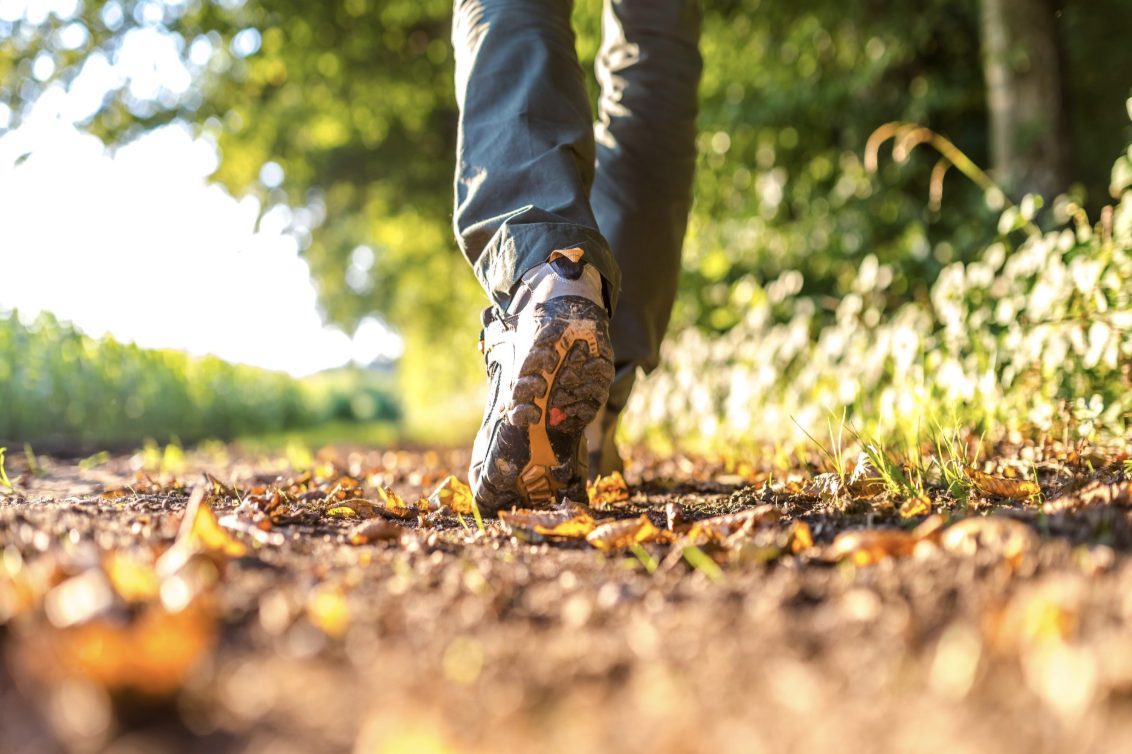
Try and be mindful about the quality of your steps too. Change things up by walking on different terrains to challenge your muscles in different ways. Inclines, grass, sand, and woodland all test our bodies and work areas like your core, legs and bottom.


How exercise can help depression

No doubt that moving makes us feel good but did you know some scientists claim exercise can be as effective as anti-depressants for those suffering with clinical depression?

When you’re feeling low, exercise can be the last thing on your mind. It could just help you lift you and we’re not suggesting you have to go full-on circuits to feel the benefits.

How exactly does exercise help our mental health?

There are many feelgood hormones that help to make up our moods, including serotonin, oxytocin, dopamine and endorphins. They all do different things but belong to the general category of neurotransmitters, chemical messengers that allow cells to communicate with each other.

  • Oxytocin: plays an important role in bonding.
  • Dopamine: helps us feel pleasure.
  • Endorphins and serotonin: increase our sense of wellbeing, by stimulating the body to release these hormones you can boost your mood.

Things that boost endorphin production include eating chocolate, laughing and having sex, and one of the best ways to get your endorphins flowing is to exercise.

Why does exercise produce endorphins?

Endorphins also play a part in pain relief. It’s thought that the reason we experience a boost in endorphins during exercise is to reduce the brain’s perception of pain so that we keep going.

  • Exercise reduces our risk of major illnesses such as heart disease, some types of cancer and stroke.
  • A study suggested 20 minutes of exercise a day, 3 times a week at a moderate intensity is enough to significantly reduce symptoms of depression.
  • NHS recommendations are that adults aged 19-64 do 150 minutes of moderate-intensity activity a week, spread evenly over 4-5 days.

What counts as exercise?

We’re talking anything that gets you moving. Could be a half hour brisk walk or a kick about in the park. Anything that gets you breathing and heart rate up can be good for your mental wellbeing.

Can exercise really replace antidepressants?

According to the World Health Organisation (WHO), depression is a leading cause of disability worldwide. It’s commonly treated with antidepressants, which can be a very effective treatment.

Antidepressants can take a while to work appropriately and some experience negative side effects. Finding non-pharmaceutical treatments that work can be used alongside medication to ease symptoms.

Non-pharmaceutical treatment options for depression include:

  • Talking therapy
  • Cognitive-behavioural therapy (CBT)
  • Meditation
  • Exercise

We know that exercise can improve the symptoms of depression, boosting mood, lowering feelings of anxiety and stress levels. If you’re struggling with depression, it’s worth considering exercise as an important part of your treatment.

However, don’t go throwing out your anti-depressants just yet. There have been studies that show the improvement was short term, or that it was only helpful for those with very mild depression. The most generally accepted stance is that exercise is a fantastic treatment option for depression, but most effective when used alongside other treatments.

This can look different for different people. For example, you might take antidepressants but find that increasing your activity levels lowers your symptoms even more, or you might put cognitive behavioural therapy approaches into practice in your life while also making sure to exercise three times a week.

What if I can’t exercise?

Apart from anything else, people who have depression are more likely to be sedentary, and low mood is not conducive to wanting to lace up your trainers and go for a run.  It’s perfectly fine to do as much as you are able to and nothing more. If you feel up to it, great. If you don’t, that’s OK too, just try again another day.

Another thing to keep in mind is that ‘exercise’ doesn’t need to be as vigorous as you’re probably imagining when you think of marathon training, hour-long cardio sessions or lifting big. A walk, a swim, some gardening or hoovering get you up and moving too.

All the recommendations suggest moderate activity has the best effect but see that as something to work up to and start with what you can manage. Keep in mind that any progress above sitting still is progress you should be proud of.

Help with depression

If you’re struggling with your mental health, make an appointment to see your GP ASAP. It’s hard but help is out there, and it starts with a conversation.


Why you should be batch cooking

ike the Robin to your Batman or the Pinkman to your Heisenberg, batch cooking needs to become your sidekick.

What is batch cooking?

Batch cooking is cooking extra portions alongside the meal you’re eating. I know what you’re thinking. How is this any different to meal prepping?

The difference is that batch cooking is pretty laid back. If you’re making a casserole one evening, you might double the ingredients and freeze half, which you then might defrost and eat a few weeks down the line. Or make double the Bolognese pasta sauce and freeze a portion so you’ve got a dinner ready to save you next time you’re tempted by a takeaway because you don’t feel like cooking. Batch cooking is not as regimented as meal prep, but it can still have great results for your weight loss.

Learning how to batch cook will dramatically streamline your meal preparation times and stop you from wandering down the road to the chippy, controlled by your belly’s darkest desires. It’s all about putting a little bit of extra effort in to reap big gains, and Future You will thank you.

How do I do it?

The concept is simple. Cook whatever you had intended to cook but make a bigger batch. Dishes that work well include casseroles, stews, Bolognese and chilli’s – especially if you bulk them out with veg.

The freezer is your friend

Don’t put the work in just to let it go to waste. Your freezer is your friend and will make the whole process even easier. Dish up dinner, box it up and you’re (almost) ready to go. There are a few rules you’ve got to follow to ensure you avoid any kind of kitchen mishaps or worse, food poisoning.

  1. Freeze individual portions as it’ll save time defrosting and stop you overeating.
  2. Make sure you cool your food down before it goes in the freezer. Batches of hot food will screw with your freezer’s temperature. Don’t leave the food out to cool for too long, as this will give bacteria the opportunity to grow.
  3. If you’re using frozen ingredients, do not refreeze it if it’s raw. Freezing food slows down bacteria growth but does not kill it. Defrosting will allow bacteria to grow and then you’d be freezing the nasties, ready for attack next time. Remember though, it’s perfectly fine to defrost, cook and then refreeze, so if you’re cooking with frozen veg, you don’t need to worry as long as it’s been cooked.
  4. Use proper freezer bags/tubs to avoid freezer burn. Yuck.
  5. Make sure there’s room in your freezer as bags/tubs expand and you don’t want anything to blow up.
  6. For smaller foods like berries or banana slices you’re better off if you ‘open-freeze’ them first. Stick them on a lined baking tray until they’re frozen solid and then throw them into a freezer bag so they don’t freeze into an almighty lump.

The ‘do not freeze’ list

You’d be surprised at the things you can freeze and most already complete meals will freeze very well if they’re mixed up in sauces.

Remember that freezing and thawing food will reduce the quality of it and as such there are some foods that probably shouldn’t pop in the freezer alone:

  • Fruit and vegetables with a high-water content such as citrus fruits, watermelon and salad greens. These won’t hold up unless you want a tasteless slush when they’ve defrosted.
  • Herbs without any form of preservatives like oil or butter.
  • Starchy carbs like rice and pasta, but bread is pretty good if you plan to toast it. If you’re making something you want to serve with rice, pasta or spaghetti, just freeze the sauce and cook the pasta or rice on the day.
  • Dairy, including eggs and especially soft cheese.

Don’t leave your leftovers behind

Batch-cooking can also work on a slightly smaller scale. You’ve cooked a 4-portion meal for 2, that means you can go back for seconds, right? Wrong. What you have is your lunch for tomorrow. When you’re serving dinner up, grab a couple of Tupperware boxes and split it straight into 4 servings, ready to be cooled and put into the fridge. Work smarter, not harder.

Go forth and unleash the power of batch-cooking. Minimum effort, maximum gain. As we said, Future You will be pleased… treat him right!


Healthy habits for better mental health

Men are less likely to seek help for mental health problems, and less likely than women to take time off work to get medical help for anxiety or feeling low. Many of us are embarrassed to take time off work for mental health concerns. 

It’s incredible, really, that we still find it difficult to talk about and seek help for our mental health. If there was anything else wrong with your body, you’d seek the appropriate medical help, so your brain should be no different. And if someone was embarrassed about having a cold, you’d think they were a bit odd. Mental health issues aren’t quite as common as the common cold, but it’s something the overwhelming majority of us will struggle with at some point in our lives. 

We want to help put an end to the shame and stigma. After all, we all have mental health and we all need to make sure that we look after it as a valuable part of our body. 

Here are our tips on what to do if you’re struggling with your mental health, or just want to give it a much-needed boost. 

See your GP 

The usual tip for going for a walk is a very positive thing and getting some fresh air will always do you good, but it’s not helpful when you’re at rock bottom. It’s not helpful when you’re in a very bad place and finding it difficult to even get out of bed in the morning.  

If you’re really struggling with your mental health, you need to see a doctor.  

It’s worth remembering: 

  • It’s easy to feel like you don’t warrant taking up their time – but you absolutely do. 
  • You are worthy and you deserve the help you need to get better, just the same as if you’d broken your leg. 
  • Whatever happens, the first step of going to get help is the hardest. Left untreated, these things have a nasty habit of spiralling out of control, so if you’re struggling, make an appointment today and get the ball rolling. 

Build healthy habits

So what are these healthy habits and how can you utilise them to improve your wellbeing? 

Exercise 

There’s a growing interest in the role exercise plays in the reduction of major mental health conditions and their symptoms, simply because it is so effective.  

It’s worth knowing: 

  • The European Psychiatric Association recommends that exercise should form a core part of treatment plans for mental illness, with physical activity proving successful in improving symptoms in people with depression and schizophrenia-spectrum disorders. 
  • A 15-minute jog can have the same effects as 15 minutes of mindfulness-based relaxation techniques. 

Eat well 

Cheat meals, treats, and splurges are fine as long as they’re not the norm. Too many greasy takeaways will leave you feeling rough, both physically and mentally.

The Mental Health Foundation suggests that as the brain is acutely sensitive to what we eat and drink, and it needs a balanced diet to remain healthy. Some foods have a long-lasting influence on our mood and mental wellbeing because of the impact they have on the structure and function of the brain. 

Do your best to eat as healthy as you can and give your brain a fighting chance. Drink water, eat your veggies and cut down on sugar.  

Look after yourself 

Exercise and healthy eating aside, there is a lot you can do to practice a bit of self-care.   

We all need to: 

  • Get enough sleep 
  • Feel fulfilment at work and at home 
  • Socialise 
  • Do things that interest us 

All of these aspects have a positive impact on your health.  

There’s no one-size-fits-all solution to any of this, but if you can find some time to figure out what you need to focus on it will go a long way towards improving your wellbeing. 

Make the most of resources available to you

We all know that GPs and NHS mental health services are stretched to the limit thanks to a decade of underfunding and the impact of COVID-19. This shouldn’t stop you from attempting to seek help from your GP, but there’s also no harm in making the most of online resources too.

See if your GP surgery has access to online wellbeing platforms (many do), or look up the ‘books on prescription’ scheme, which is a list of helpful books put together by professionals.

What’s this got to do with weight loss? 

A recent study found that there is a link between high BMI and poor mental health, which probably won’t come as a surprise. It’s easy to see that if you’re unhappy with your body, then it follows that you’re probably pretty unhappy generally too. 

 It’s worth remembering: 

  • Losing weight isn’t always a cure. 
  • Many find once they reach their weight loss goal they’re not as happy as they thought they’d be. The excess weight was a symptom of a bigger problem. 
  • Eating well is so important, food has a huge effect on how we feel.  

Going to bed early isn’t going to magic away those pounds you want to lose, and antidepressants might not directly help you get to your goal weight. But it’s all linked and tied up together in a complicated, tangled web. It’s one piece of the jigsaw. Looking after your wellbeing is one way of giving yourself the best shot at getting healthy, both physically and mentally. 

If you’re struggling and require support now 

Samaritans 

Tel: 116 123 (24 hour line) 

Email: jo@samaritans.org 

CALM (Campaign against living miserably) 

0800 58 58 58 – 5pm-midnight every day 

SANE  

Tel: 0300 304 7000 (4.30-10.30pm every day)  


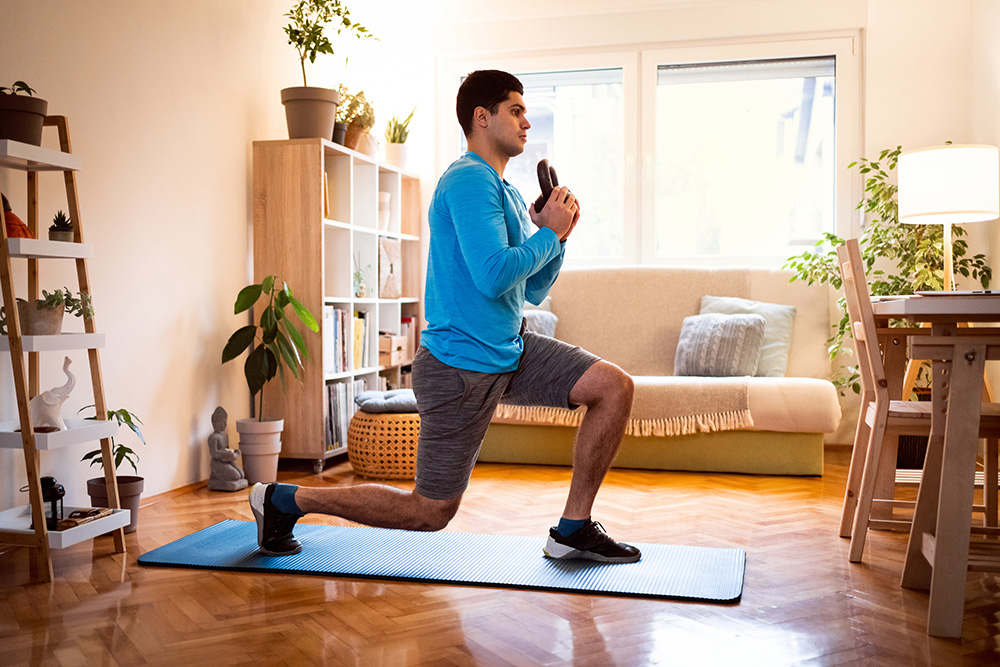
Maintaining good form while exercising

You might think you’re doing amazingly by starting to exercise, but if you’re not doing it right you could be doing more harm than good.

It’s true that anything that gets your heart rate up is a good workout. But when it comes to bodyweight exercises, you’ve also got to make sure that you’re working out with good form.  

What is ‘good form’?

Good form doesn’t mean that you have to do things perfectly, or with a professional athlete’s skill. It just means using the right technique for each exercise you do and getting your body in the right positions, allowing you to fully reap the rewards of exercise. 

What are the benefits of good form?  

It’s mainly about preventing injury. Using your body improperly can put unwanted stress on muscles and joints and lead to all sorts of injuries that can put you out of action for weeks or months at a time.  

Maintaining good form also means you’ll have proper control over your body while performing bodyweight exercises, so you won’t feel quite as undignified while you get to grips with doing something new.  

What happens if you’re not doing it right?

Well, you definitely increase your chances of seriously injuring yourself, when you should take every step to avoid that for obvious reasons. Bodyweight exercises are a safe and very effective way of exercising, but only if you do it right. 

Doing weight exercises incorrectly can also hamper your progress as you won’t be exercising your muscles as well as you could be. You might think you’re better at it than you actually are, which could lead you to increase the intensity or weight and run the risk of even more injury.  

Basically, it’s a no-win situation even if you’re lucky enough not to injure yourself. 

Examples of good form

Good form differs depending on the exercise you’re doing, and it can also look different for different people. An example of good form is maintaining good posture – stand up straight (think: shooting people in the head with lasers out of your chest), don’t hunch your shoulders and keep your head level. 

When squatting, for example, you’ll want to make sure your back is straight, your head is level and your knees don’t extend beyond your toes.  

How to tell if you’re doing it right 

Take a look at yourself performing the exercise in a mirror, if you can. Find instructional videos from personal trainers online, or if you’re at a gym see if you can get one of the personal trainers there to give you feedback on how you’re doing. 

Pay close attention to the specifics of each exercise and do your best to mimic them. It can be hard to critique our performances because you might feel like you’re doing it perfectly well, so it always helps to get an extra pair of eyes to check. 


Easy ways to sit less and move more

We get it, it’s tough to go from couch potato to man of the match, and nobody expects it to happen instantly. We’ve all been there, and everyone will understand, so never feel you must push yourself. 

It’s a good idea to try and boost your activity levels little by little over the weeks, as being inactive is linked with being overweight, type 2 diabetes, some types of cancer and even early death. Here are some fail-safe ways to do just that. 

Take the stairs 

Your first instinct is to take the escalator. It’s there, it’s easy and it’s quick, so why wouldn’t you? But making the effort to climb the stairs instead can really pay off. It’s a quick burst of exercise that’s great for building your leg strength. 

Walk more

Instead of watching TV for hours on end in the evening, try going for a walk, even if it is a short one around the block. Go with a mate and debrief together over your last match, or spend some quality time with Spotify as you walk. Either way, even if you’re only out for half an hour, it breaks up the evening and means you get some much-needed activity in. 

Park further away or…ditch the car

A parking spot right outside the shop is the holy grail, but parking further away will ensure that you’re forced to get in a little exercise. Plus you won’t get caught up in the frustrations of trying to beat other drivers to that perfect spot. 

Get used to making walking your first mode of transport wherever possible. If it’s a 5-minute drive away, ask yourself if you really need to take the car. Of course, there will be times when it’s not practical to walk, but if you’ve got time to spare and it’s not raining cats and dogs, try and walk it. 

Get up, stand up

Sitting too much is bad for our health, and studies have repeatedly shown that sitting or lying for too long can damage our hearts, make us more prone to dementia and increase our risk of developing type 2 diabetes. 

The NHS says that many adults in the UK spend 9 hours a day sitting down, which is a lot. 

The UK Chief Medical Officers recommend that you should regularly break up lengthy periods of sitting by getting active for 1-2 minutes. And no matter how unfit we are, we can all get up and move for a max of 2 minutes, right?! How about a walk upstairs, a set of squats, or even consider using a standing desk? 

Get an activity watch

If you’re a competitive sort or motivated by stats, you can boost your activity levels by investing in an activity watch to track your steps over the day. The general recommendation is that we aim for 10,000 steps a day, but any increase in your current activity levels is worth celebrating. Think about getting a watch to take note, or health apps can now do the same job on your mobile.

Don’t think of getting active as an all-or-nothing thing. You don’t need to suddenly start working out for hours on end. It’s unrealistic and if you’re very unfit you could do more damage than good. Start small and make easy-to-maintain lifestyle changes and you’ll be surprised at how much it can improve your fitness. 


WTF Is sleep hygiene?

We need sleep for our body to restore and repair, as well as it being vital for our brains and mental health. The (not so) secret to good sleep? Good sleep hygiene. 

Sleep hygiene is a term used to describe your practices and routines around sleep. It includes your sleeping environment, daily routines, and general attitude to sleep. 

You can improve your sleep hygiene by setting up good habits that promote consistent, restful sleep. 

On average, we need around 7-8 hours of sleep a night. Factoring in the time it takes to drift off, this means you should aim to carve out 8-9 hours to get a full night’s sleep.  

Here’s some tips on how to use the concept of sleep hygiene to sleep well.  

Wind down well

Look at what’s going on before you drift off. Is it too stimulating? Is it calming? Are you scrolling through your Instagram or Facebook feeds until the early hours? Making small changes like leaving your phone out of the bedroom, having a bath before bed or leaving serious (and often stressful) discussions about finances to earlier in the day can aid more restful sleep.  

Set up your sleep environment

It’s not always possible but aim to make your bedroom a space where you can leave your busy life at the door and retreat for optimum sleep. Switch off screens as phones, tablets and laptops emit blue light which is stimulating and disrupts your circadian rhythm. If space is a problem, try and change the space from day to night mode by changing the throw on the bed or using a lamp at night only. 

Use a sleep diary

If you’re finding it difficult to get a good night’s sleep, it might help to keep a sleep diary. Make a note of when you feel sleepy and awake to help you identify your natural circadian rhythm or body clock. You can also start to identify patterns and triggers that lead to poor sleep, like particular foods, working out too close to bedtime or room temperature. 

It can be incredibly frustrating when try as you might, you can’t get a good night’s sleep. Changing your lifestyle and setting good habits can be ways of helping yourself get the sleep you need. 


8 easy ways to pump up your protein

Reducing calories isn’t easy, especially in those moments where you feel like eating everything in sight. This is where protein becomes your best friend: it can help make you feel fuller for longer. Here’s how you can pump up the protein in your diet.

Eggs

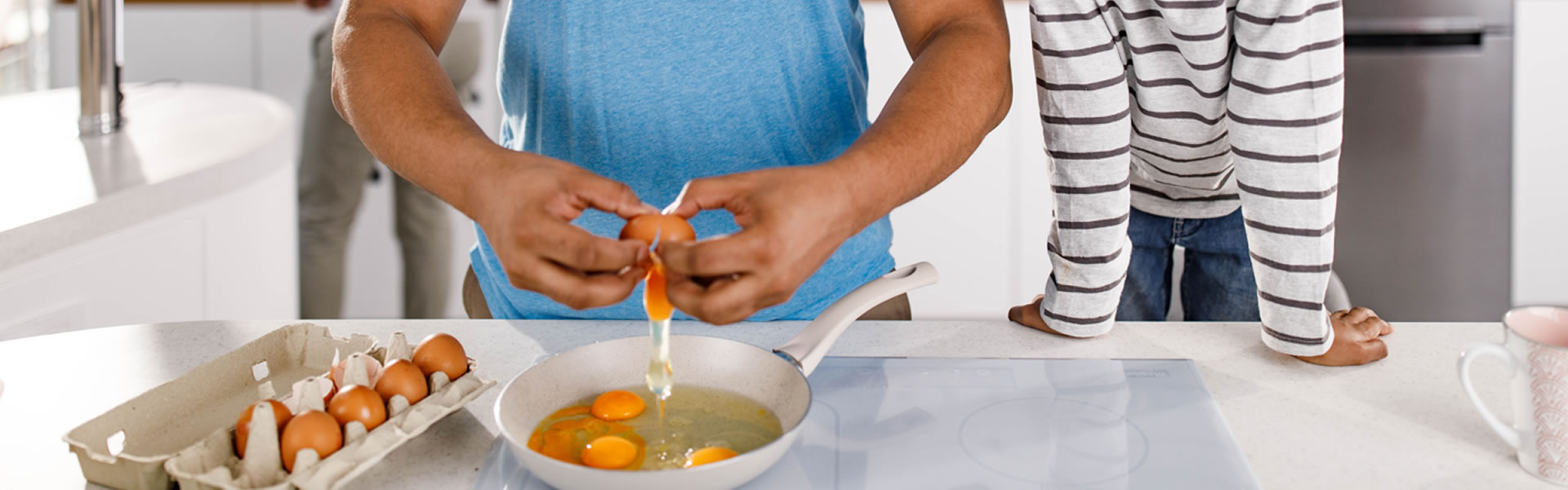
Eggs are a really versatile way of sneaking a bit more protein into your diet. Fried, scrambled, poached, turned into an omelette or a frittata, or even hard boiled and eaten as a portable snack – eggs are a great source of protein, with a large egg containing 7.5g and 75 calories.  

Eggs are also rich in vitamins D, E, K, B6 and B12, so load up and forgo the multivitamin. 

Tofu 

You may think tofu is bland, spongy and firmly reserved for veggies and vegans, but think again. Tofu is a flavour vehicle, and it soaks up whatever you throw at it. 

It can be a really tasty, protein-rich alternative to meat. It has 118 calories and 12.5g protein per 100g, and there’s so much you can do with it. 

Chicken

Ah yes, where would we be without the humble chicken breast? From bodybuilders who eat 72 of them a day to your average Joe who relies on them as a quick weekday meal staple, we’ve got a lotta love for chicken breasts. And with 24g of protein for 100g (which is more or less your average chicken breast), who can blame us? 

Greek yoghurt 

Greek yoghurt is another of those things that seems kinda boring if you’ve only ever spooned it from the tub. It’s tangy, thick and unless you sweeten it it’s probably not what you were looking for when you attacked the tub (it’s nothing like a Muller Corner. Boo). 

But with a bit of thought, you can transform Greek yogurt into a delicious dessert or add it to meals for a bit of creaminess. 

Buy Greek yogurt, not Greek-style, for the good stuff (can’t go wrong with Fage). The classic stuff is 93 cals for 100g, with 9g of protein. 

You can also get 0% varieties which contain no fat, and surprisingly Fage’s 0% variety contains more protein – 54 calories with 10.3g protein. 

Beef jerky

Beef jerky is a solid snack to have on hand as it’s fairly low in calories and can pack a hefty protein punch. There are also many different flavours available, and if you’re feeling fancy, you can branch out from beef and go for salmon jerky, veggie jerky and even reindeer jerky.  

A 40g packet of Tesco beef jerky has 13.4g protein, with 114 calories. 

The downside to jerky is that it’s expensive, with one pack of Wild West beef jerky retailing for £2.99. Yikes. 

Red lentils 

You might have passed red lentils in the supermarket without a second thought, but these little pulses are definitely worth adding to your trolley.  

They’re brilliant at bulking up meals, and with 7.3g of protein and 93 calories in 100g (which is loads), they certainly hold their own nutritionally. 

Salmon

Do you eat enough oily fish? The NHS recommends that we get at least one portion of oily fish a week as they’re high in a whole host of vitamins and minerals, including omega 3, which helps to keep your heart healthy. 

Salmon is an oily fish that is also high in protein, so perfect for upping your protein intake while also getting the other benefits salmon brings. 

For 100g (around an average salmon fillet) it’s 209 calories and 25g protein, and there’s a lot you can do with salmon as the star of the show. 

Almonds 

Almonds are another great snack to have on standby, and they’re surprisingly high in protein. A 30g handful will set you back 182 calories and will provide 7.9g of protein.  

While they’re delicious eaten as a snack, there’s a lot you can do with them to incorporate them into your meals too to add a welcome crunch.  


Healthier drinks when you’re watching the game

Kick off’s coming and you’re in need of refreshment, so what are you going for?

A beer might be the customary accompaniment to watching the rugby, but if you’re watching your alcohol intake or simply don’t fancy a pint, here are some ideas for healthier alternatives.

Non-alcoholic beer

We understand if you’re hesitant about trying non-alcoholic or low-alcohol beer, but they’re honestly not as bad as they used to be. Loads of brands make low-alcohol varieties and you’re bound to find something that’ll satisfy your tastebuds without the hangover.

They can be lower in calories too, for example a 330ml bottle of Peroni clocks in at 136 calories and its non-alcoholic counterpart, Peroni Nastro Azzurro 0.0%, has 72 calories. A 440ml can of Carlsberg is 136 calories, and their 0.0 version (which comes as a 330ml bottle) clocks in at 63 cals.

A can of fizz

Alright so we’re playing fast and loose with the term ‘healthier’ here, but sometimes only something fizzy will do. It goes without saying that diet or ‘zero’ versions of soda are probably the better choice as they’re sugar-free and very low in cals (a can of Pepsi Max, for example, has 1 calorie).

Water

You read that right. It’s boring but you need to drink more water, so get some in the fridge in advance and enjoy a crisp and refreshing glass of water. Add sugar-free squash if you must or go fancy with a slice of cucumber or lemon.

Coconut water

Coconut water had a bit of a moment a few years ago thanks to its health benefits – namely that it’s full of minerals and electrolytes and can help manage blood sugar levels. You can find it in chillers at the supermarket, and if it’s a hit it can be a nice alternative to water. 100ml of ready to drink coconut water is around 18 calories, with 4g of sugar.

A cuppa

There’s no occasion that isn’t improved with a nice cup of tea in our humble opinion, so stick the kettle on before kick-off and enjoy. Both tea and coffee count towards your hydration goals (which should be to drink around 8 glasses of fluid a day), just lay off the coffee when it’s close to bedtime.

Black tea and coffee have a grand total of around 2 calories per cup, it’s the milk and sugar you’ve got to look out for. 200ml semi skimmed milk is 100 cals, and a teaspoon of sugar is 16 cals.

Alcohol

If you’re watching the game at a pub and are really keen on having an alcoholic drink, but you’re looking to save calories, skip the beer and go for vodka and Diet Coke (a 25ml single shot of vodka is around 54 calories), or a gin and slimline tonic (a single measure of gin is around 52 calories and a 150ml serving of slimline tonic is around 3 calories).

The other thing to watch out for is how much you drink. If a Diet Coke and vodka is only 54 calories, that’s good news for your calorie count for the day…but that soon adds up if you have more than one.


The power of protein

You’ve probably heard the buzz around protein, but why is it so important?

Worrying about your protein intake used to be something reserved for the most dedicated of bodybuilders, who knew that eating enough protein is essential for building show-stopping muscles.

But keeping up with your protein needs has since moved into the mainstream as we’ve all realised that getting enough not only helps support muscle growth, but it also makes eating well feel like less of a chore.

What does protein do?

Protein is essential for every cell in the body. It helps to build and repair muscle, cells, and tissue, and it’s so effective that it’s commonly known as the ‘building blocks’ of the body.

But it does much more than that. Protein plays a part in strengthening your immune system, transporting oxygen from the lungs to the rest of the body, helping cells communicate, and it even helps give your hair, nails, and skin a protective barrier.

In short, protein helps to keep our bodies functioning. A lack of protein can lead to muscle loss, fatigue, and weakness, although it’s incredibly rare to become protein deficient in developed countries.

How does protein help with weight loss?

Increasing how much protein you eat is a fantastic way to encourage weight loss. It helps you to feel fuller for longer, because protein-rich foods are digested slower than carbohydrates. This can help you to eat less, as when you’re feeling satisfied, you’re much less likely to overeat or seek out unhealthy snacks.

Protein helps to preserve your muscle mass while you lose fat, which boosts your metabolism as your muscles continue to burn calories even when you’re at rest.

How much protein do I need?

How much protein you need varies from person to person and depends on how old you are, how tall you are, how much you weigh, and how active you are. In general, you should aim to get at least 0.75g of protein per kg of bodyweight, but if you’re trying to lose weight it’s a good idea to increase this to around 1.2g – 1.8g of protein per kg of bodyweight.

For example, if you weigh 110kg, you might aim to eat 132g of protein a day.

Sources of protein

Aim to include a source of protein in every meal. Good sources of protein include:

  • Lean meats, like chicken and turkey
  • Seafood, like tuna, salmon, and mackerel
  • Eggs
  • Dairy products, like Greek yoghurt, cheese
  • Legumes, like edamame (soybeans), lentils, borlotti beans
  • Tofu and tempeh
  • Nuts and seeds, like hemp seeds, pumpkin seeds, peanuts, and almonds

You can also buy protein-enriched foods, including (but not limited to!) shakes, bars, pancakes, brownies, and cookies. You don’t need to eat any of these to get enough protein in your diet, but if you feel like you need a boost (perhaps after a particularly tough workout), be sure to check the label as many of these packaged foods are surprisingly high in calories, fat, and salt.

A good way to ensure you’re getting enough protein is to make sure you’re eating a wide variety of food. Don’t just stick to your usual meals – challenge yourself to make a meal with a vegetarian source of protein, or snack on nuts and seeds.


Lose weight, Play Rugby

Secure your spot

MAN v FAT Rugby is for men with a BMI of 27.5 or over. Over 90% of players lose weight and get fitter, why not join them.

Contact

Email: rugby@manvfat.com

Phone: 0345 163 0042

Links

Social

© 2024 MAN v FAT Limited. All rights reserved.

Terms & Conditions  |  Code of Conduct  |  Privacy Policy  |  Cookie Policy

Privacy Settings
We use cookies to enhance your experience while using our website. If you are using our Services via a browser you can restrict, block or remove cookies through your web browser settings. We also use content and scripts from third parties that may use tracking technologies. You can selectively provide your consent below to allow such third party embeds. For complete information about the cookies we use, data we collect and how we process them, please check our Privacy Policy
Youtube
Consent to display content from - Youtube
Vimeo
Consent to display content from - Vimeo
Google Maps
Consent to display content from - Google